


A while ago, I spent months in virtual rooms with the decision-makers of South African firms. Different industries, different sizes, different levels of digital maturity. Those conversations became my research at Wits Business School, and I took one question into the analysis: when a firm spends on technology, what is it actually buying?
The answer came back with remarkable consistency. Efficiency. One of them put it plainly: technology is “used as an assist… it’s not currently a way of generating revenue.” Another described using IT to “cut away wastage.” At a large services firm, an executive told me cost-cutting measures were guiding all technology decisions. And when I asked about using technology to grow revenue instead? The most honest answer in the room: “still investigating at the moment… not there yet.”
Technology in a business only ever has two jobs. It can make your machine cheaper to run. Or it can make more people want what your machine makes. That is the entire menu. The first is the operations question: efficiency, convenience, ease, simplicity. It belongs to the COO.
The second is the growth question: what does the market want, and how do we become the answer? It belongs to the CEO. Two noble jobs. But they are not the same job, and they are nowhere near the same size.
Now look at what the AI craze is selling. Faster emails. Summarised meetings. Automated workflows. Leaner headcount. Almost every tool, every demo, every pitch is an answer to the operations question. We are turning everyone into a COO. An entire generation of leaders is being handed the operations chief’s mandate and told it is their strategy.
And here is what my research adds: the bias was there before AI arrived. The craze is pouring petrol on it. When the firms in my study lacked a clear strategy, they defaulted to efficiency projects, and the reason is human. Efficiency is the safe purchase. It is internal, measurable, and defensible in a budget meeting. Growth work faces the market, and the market talks back. Cutting cost feels like control. Chasing “market desire” feels like exposure. So the money flows to the comfortable question.
But there is an order to the two jobs, and the order is not optional.
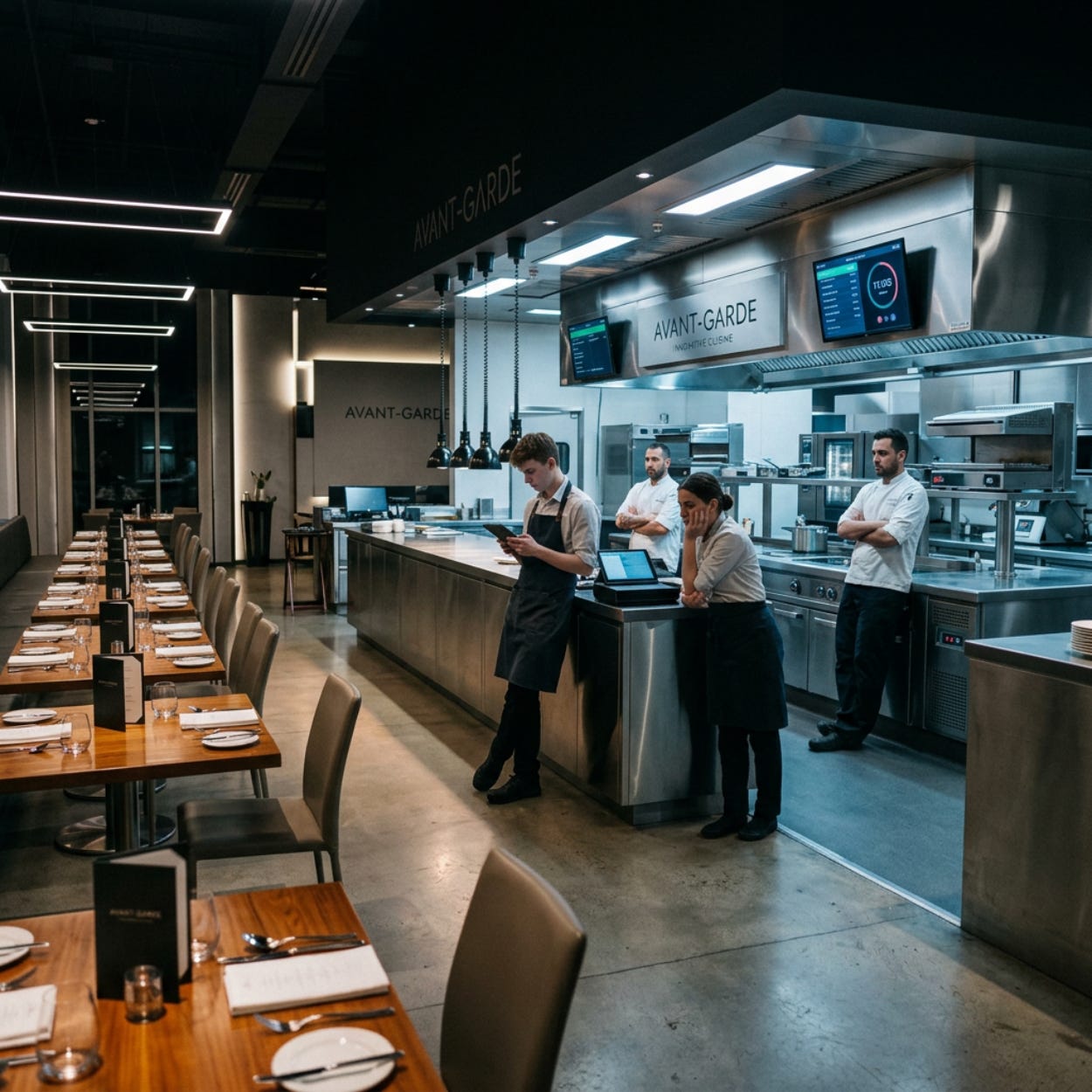
Efficiency is a multiplier on demand. It better services the customers you already have, the orders already coming in, the traffic already at the door. And a multiplier is only as good as the thing it multiplies. A restaurant with an empty dining room does not need a faster kitchen. Optimise that kitchen brilliantly and you will produce nothing, faster and cheaper than anyone in town. Before you organise for efficiency, you have to ask what you are organising. Traffic comes first. It has to.
And where does traffic come from? In any market, it comes from buyers wanting your product. And the business that understands its market will deliver what it wants. Simple. The market walks through the door of the business it feels understood by. This kind of “resonance” is the primary way demand gets awakened or won, and it is the one you can build on purpose.
Which brings us back to my core argument: growth is the domain of desire. What is the “emotional want” of your market?
If you don’t know what an emotional want is, I suggest jumping back an article or two and get the full detail. I made a comprehensive argument in the first essay of this series: human desire is the backbone of commerce, and machines know nothing of it.
As a quick refresh: A root feeling usually comes first, then what the person wants emotionally, and then the particular product they ask for. Efficiency speaks to convenience. Desire decides whether anyone shows up in the first place. Swap the order of those two and you will run the cheapest business in your category into the ground.
There is a second problem with the efficiency race, and it should worry leaders most: everyone is running it in the same shoes. Your competitors are subscribing to the same tools, deploying the same models, automating the same workflows. Any efficiency you can buy off the shelf, they can buy too.
Symmetrical gains cancel. When everyone speeds up by the same amount, nobody gets ahead. Ten years from now, the automated back office will be table stakes, the way electricity is table stakes. What does not cancel is knowing what your market wants, and what they want emotionally, because that knowledge is not on any shelf. It sits in the heads and hearts of your buyers, and it comes out only for the business that listens for it. The CEO’s mandate is growth, which is predicated on understanding the emotional drivers of the market. The COO’s mandate is primarily efficiency.
Efficiency is rented. True resonance is owned.
Before this reads as a case against efficiency, my own research forbids that conclusion. The most promising firms in my study were the ones doing both: improving today’s operations while building tomorrow’s revenue. One firm had streamlined its own operations with software it built in-house, then packaged that same software as a product its customers now pay for. Cost centre to revenue stream. That is a valid pattern. The finding is that efficiency alone is a slow surrender, and that the order matters.
Desire leads. Efficiency serves. Answer the CEO’s mandate first, and only then attend to the COO.
So here’s a quick exercise, and it takes a few minutes. List the last five technology decisions your business made. Especially AI tools. Next to each one, write a single letter. C if it makes your business cheaper to run. G if it helps more people want what your business sells. Be strict. Now count. Five C’s does not mean you have been foolish. Every C is probably paying for itself. It means you have hired AI as your operations chief and stopped prioritising the growth chair. The market seat. The desire seat. The one the whole restaurant depends on.
The machines will keep getting faster, and you should let them run the kitchen. Your job is to fill the restaurant. And the room fills for the business that knows what its market wants. Which is another way of saying: the business that listens.
Make it rAIn, KG